
How to apply this guide
Why the closest finishes take longer to confirm, and what a shared placing actually means.
A close finish does not by itself establish a dead heat: check the reported result status. When reviewing an each-way bet, the each-way calculator lets you apply the settlement inputs rather than infer them from the photograph.
Why a television picture is not the verdict
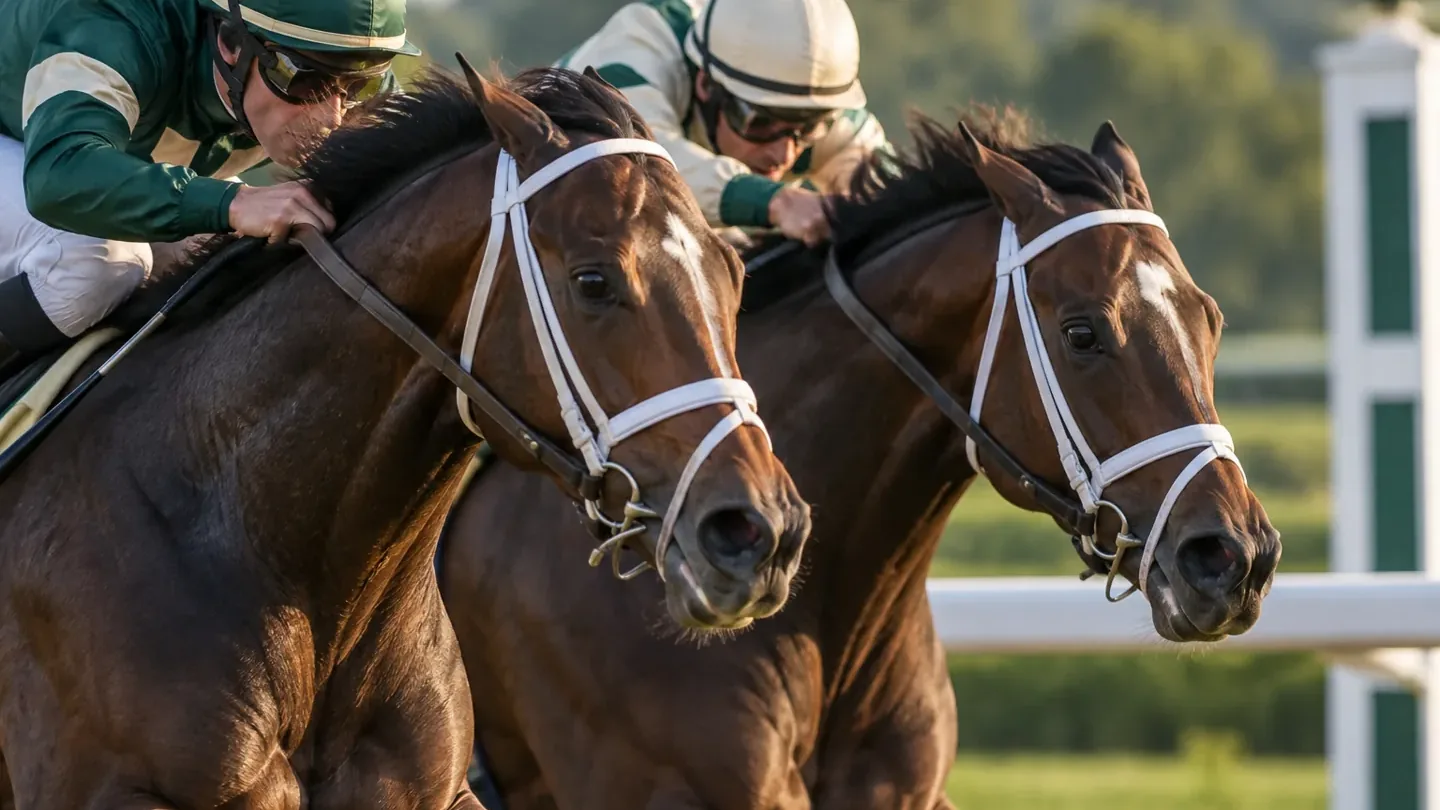
A camera watching the race from an angle can make one horse appear ahead even when the finish is much closer. The judge uses dedicated finish-line evidence to determine the order. It is the alignment of the horses at the line that matters, not a frame taken before or after it.
A “photo” notice means that the finish is being examined. It is not a declaration that the horses have tied. Wait for the announced order rather than drawing a conclusion from a freeze-frame.
What a dead heat means
A dead heat records a shared placing when the finish cannot separate the relevant horses. The tied position should stay shared in a results table. A website should not break the tie alphabetically or give one horse a higher position simply because it arrived first in a data response.
The practical reading rule is simple: look for the shared-place label and read the rest of the finishing order as supplied. Do not manufacture a winning margin between tied horses.
Why the result may arrive in stages
The first report may identify clear finishers while a closer placing still needs examination. A provider can then publish a more complete result. A rapid update is useful, but confirmation is more valuable than an unsupported guess.
On results.fast, the collection timestamp refers to when our system received the provider record. It is not evidence that the judge has completed a review. The status field carries that separate information.
What to check when two sites disagree
Confirm that both pages refer to the same race and date, then compare their update times and status labels. One page may be showing an earlier provisional order. If a conflict persists, consult the relevant racing authority’s published result.
A result service should make corrections visible and avoid calling an incomplete report final. Our correction policy explains the information needed to investigate a discrepancy.
What a finish-line image is designed to show
An ordinary sports photograph captures a scene from a camera position. Finish-line equipment is arranged to resolve the order at the line. Perspective makes the difference important: a horse nearer a television camera can appear to lead even when the relevant finishing points are nearly level.
The useful question is not which horse looks ahead in the most dramatic image. It is whether the judge has issued a result after examining the appropriate evidence. Treat social-media freeze-frames as observations rather than a replacement for that determination.
A close finish and an enquiry answer different questions
A photo review concerns the order at the finish. An enquiry can concern events during the race and their consequences under the applicable rules. One process should not be used as shorthand for the other. A clear visual winner does not, by itself, tell you whether another matter is under review.
If a results service supplies both a placing and a review notice, retain both pieces of information. Do not remove the notice because a winner’s name is already present. Readers need to know whether they are seeing an initial order or an outcome with further review outstanding.
How to interpret a close-finish update
| Display | What you know | What remains uncertain |
|---|---|---|
| Photo | The finish is being examined. | The order or a particular placing. |
| Provisional order | An initial order has been supplied. | Whether it will remain unchanged. |
| Dead heat | A shared placing is recorded. | Other fields may still be incomplete. |
| Enquiry | A separate review is reported. | Its outcome and any result amendment. |
Why the first three can take longer than the winner
Imagine a clear winner followed by two horses almost level for second. A report may name the winner while the next placing is checked. That is not evidence that the service has lost the other horses; it can be an incomplete stage of the result. A later report could separate them or record a shared placing. In either case, retain the race identity and replace the earlier order with the updated one. Never turn “second place under review” into a guessed second and third simply to fill a table.
A practical reading checklist
- Confirm which placing is being examined.
- Wait for the reported order rather than reading a television angle.
- Distinguish a photo review from an enquiry.
- Preserve a shared placing exactly as supplied.
For unfamiliar terms, use the racing and football glossary alongside the result.
Common questions
Does a long delay mean there will be a dead heat?
No. Time spent checking a finish does not establish the outcome. The result could separate the horses, record a tie, or involve an issue unrelated to the closeness of the finish.
Should tied horses be sorted alphabetically?
Their names can be arranged for display, but they must retain the same recorded position. Display order must not be presented as a sporting distinction.
Sources and further reference
Examples in this guide explain how to read a record; they are not reports of actual events. Competition-specific rules and the provider’s field definitions take priority for a particular result.